- Most attendees are interested but not ready; readiness is a matter of timing the advisor does not control.
- The common error is nurturing for a few weeks and then going quiet, right before it would have mattered.
- Nurture by continuing to teach, not by sending empty “checking in” messages.
- A structured, repeatable sequence beats good intentions, which fade.
- The payoff is being the obvious call when a prospect’s timing finally changes.
A Nurture Path for the ‘Not Yet’ Crowd
Most attendees are not ready on day one. Staying useful until they are is where the pipeline lives.

Nick Schilling
CEO
After an event, a handful of attendees are ready to talk, and they get the attention. The rest are filed away or quietly dropped. That is a mistake of arithmetic as much as strategy, because the not-yet group is almost always the largest part of the room, and often the most valuable over time. Most of those people are not uninterested. They are early. The advisor who stays present and useful until their timing turns is the one who eventually earns the conversation.
Not yet is not no. It is the largest, most-neglected group in the room.”
Key Takeaways
“Not Yet” Is a Timing Problem, Not a No
Readiness usually has little to do with how good the event was and everything to do with where the prospect is in their own life. A retirement date has not been set. A house has not sold. A parent has not yet needed care. These are the triggers that move someone from interested to ready, and the advisor controls none of them. Treating a “not now” as a rejection throws away people who were always going to need help, just not on the advisor’s schedule. Interested but not ready is not the exception in a room. It is the majority.
The Cost of Going Quiet
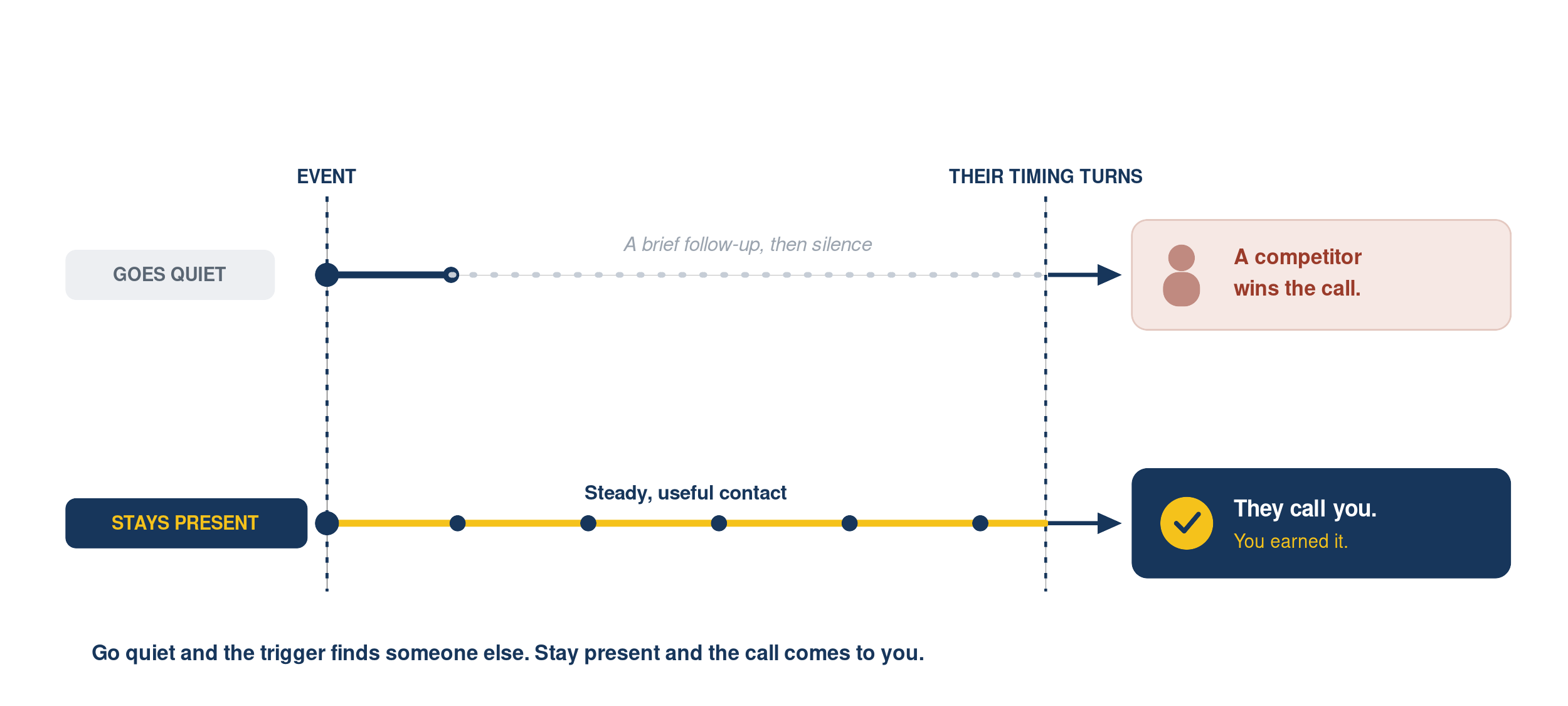
Here is the pattern that quietly wastes most events. An advisor follows up for a week or two, hears nothing definitive, and moves on. Months later, the prospect’s situation changes and they are suddenly ready. But the advisor has been silent for so long that the memory of the event has faded, and when the prospect goes looking for help, someone else is in front of them. The interest was real. The timing eventually arrived. The advisor simply was not there when it did. Nurture exists to close that gap.
Nurture by Continuing to Teach
The instinct, once a prospect goes cold, is to switch to marketing: periodic “just checking in” notes and offers that ask for a meeting. It rarely works, because it abandons the thing that earned their attention in the first place. The trust came from teaching, so the nurture should keep teaching. Useful, relevant education that speaks to their situation keeps the relationship warm and keeps reinforcing why they were interested. The prospect should keep hearing from the same helpful educator they met at the event, not from a salesperson who now wants a decision.
Make It a System, Not a Good Intention
Every advisor means to stay in touch. Intentions are exactly what fail, because they depend on remembering, and busy advisors forget. What works is structure: a planned, repeatable sequence of educational touches spread over months, set up once so it runs without depending on anyone’s memory. The specific content matters less than the consistency. A prospect who hears something useful from you every few weeks for six months is being nurtured. One you meant to email and never did is being lost.
Every Touch Has to Earn Its Place
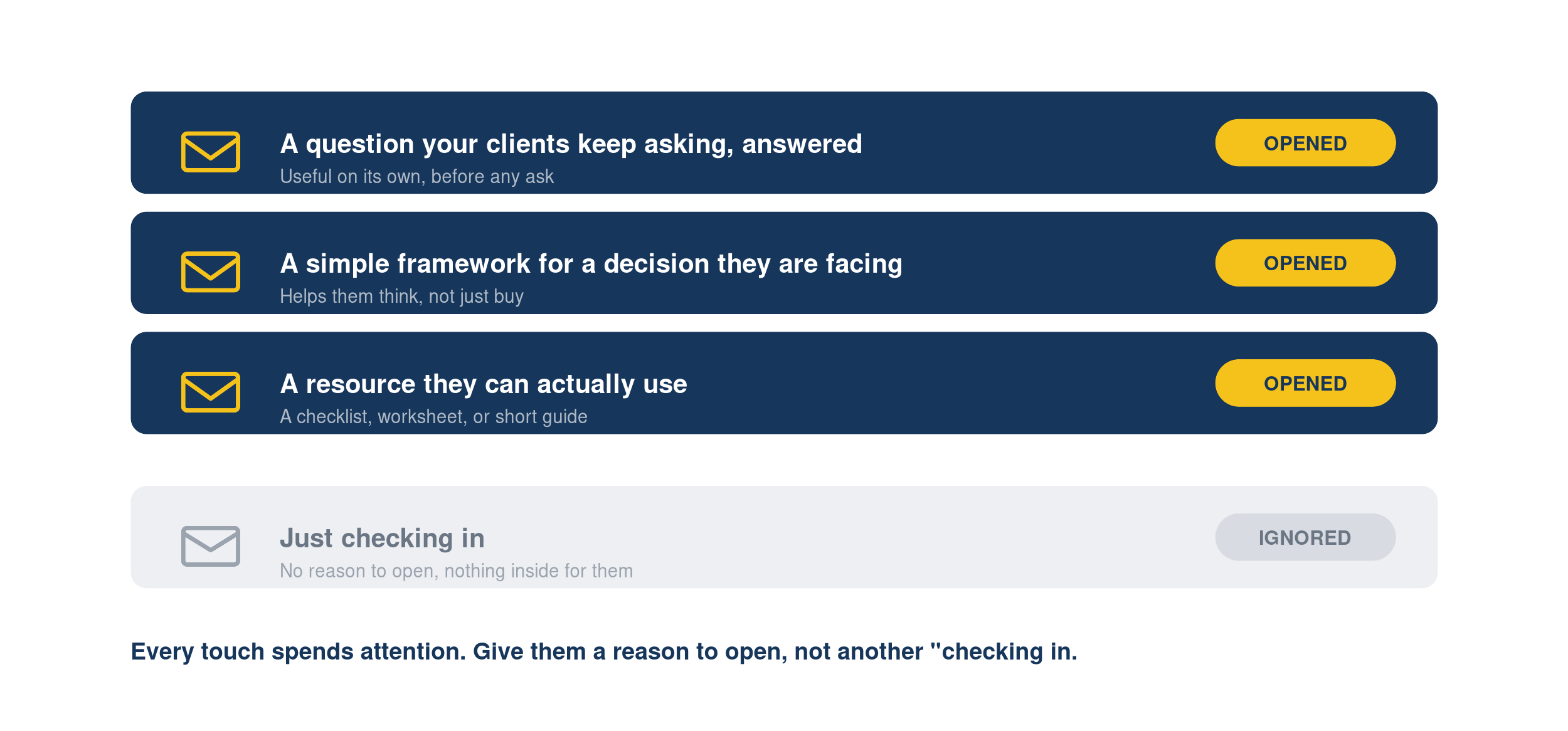
Consistency is not permission to be noise. The reason “checking in” fails is that it gives the reader nothing, and people stop opening messages that waste their time. Each touch in the sequence should carry something worth the open: a clear answer to a common question, a useful way to think about a decision they are facing, a resource they can actually use. Stay present by staying useful. The moment the nurture becomes empty contact, it starts working against you.
Be There When the Timing Turns
The entire point of the sequence is a moment the advisor cannot schedule. One day the prospect’s situation shifts, the trigger finally arrives, and they need to act. The advisor who has been quietly teaching them for months is the obvious person to call, because the relationship never went cold and the trust never had to be rebuilt. Nurture is not about pushing a slow prospect to move faster. It is about making sure that when they are finally ready, you are the one already standing there.
Growth Lives in the Long Middle
The ready buyers in a room take care of themselves. Growth, over time, comes from the much larger group who were interested and early, and from staying useful to them until their timing catches up. A structured, education-led nurture is what turns a one-night event into a source of clients for months and years afterward. Keep teaching, stay consistent, and be there when it counts. That is education working as a growth engine, not just a single evening.
See How Education-Led Marketing Works
Learn how advisors use FINRA-reviewed courses and repeatable campaigns to attract better-qualified prospects.