- The audience decision, made before any invitation, sets the ceiling on everything the event can produce.
- Build the audience to look like the clients who already fit your practice, rather than filtering people out.
- FMT's targeting is additive and data-driven: more than two decades of direct-response performance across hundreds of attributes, not a generic mail-house list.
- The gain shows up as effectiveness at the same list size: more registrations per event and a lower cost per lead, which compounds over a year.
- Treat audience building as a repeatable practice that sharpens with every event.
Before You Send the Invite: Choosing an Audience That Converts
The most important decision about an event is made before anyone is invited.

Nick Schilling
CEO
We made the case recently that the fastest-growing advisors have stopped trying to serve everyone, and that fit, not volume, is what predicts growth. That piece was about why. This one is about how, because "get specific about your audience" is easy to nod along to and harder to act on. Specific how? Specific about what? And once you know who the room is for, how do you actually reach them?
The work happens before a single invitation goes out.
You cannot fix a poorly chosen audience with a good presentation.
Key Takeaways
Start With the Situation, Not the Demographic
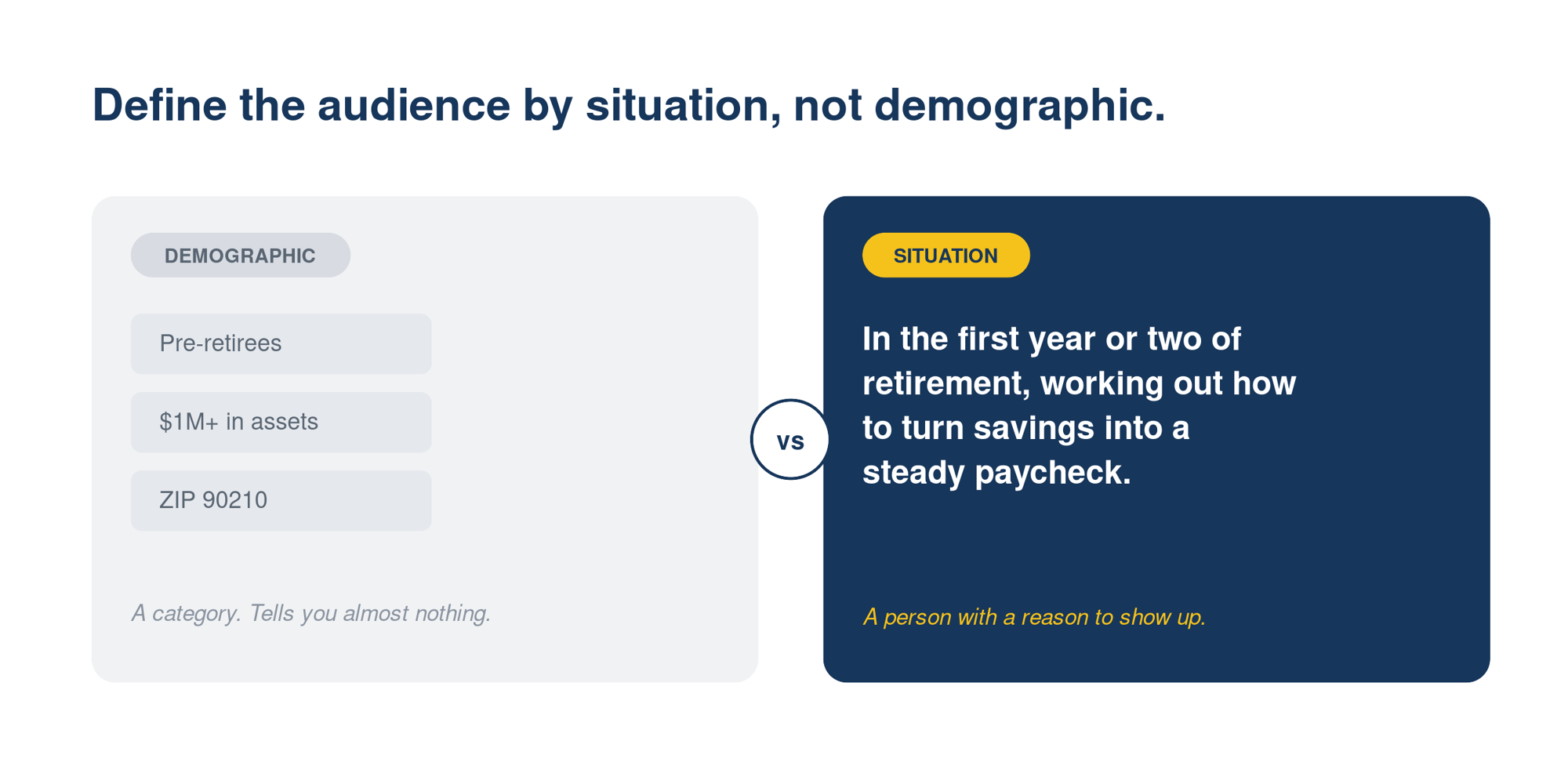
Most audience definitions stop at demographics: an age range, an asset level, a set of zip codes. Those describe a category, not a person with a reason to show up. A precise audience is defined by situation, meaning a specific decision in front of them, a change that just happened, or a question they are already asking.
"Pre-retirees" is a demographic. "People in the first year or two of retirement, working out how to turn savings into a steady paycheck" is a situation. The second tells you what to teach, how to frame the invitation, and what the follow-up should offer. The first tells you almost nothing.
A few more examples of what a situation looks like:
- Households nearing Medicare age, unsure how it fits with the rest of their plan
- People who recently inherited and have never managed a sum that size
- Owners a year or two from selling, with most of their wealth still inside the business
Each is something a person is living right now, which is what makes an event feel urgent rather than optional
Reverse-Engineer From the Clients You Want More Of
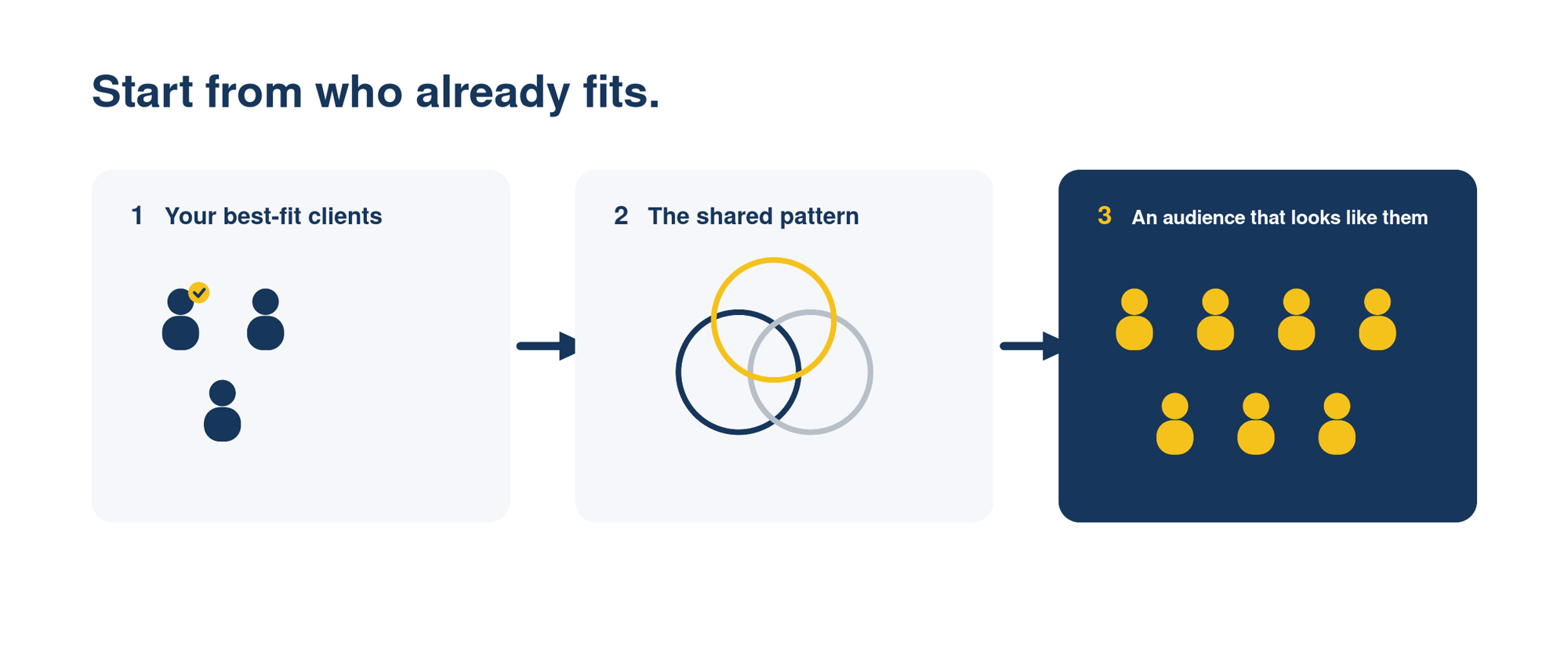
One of the most reliable ways to define an audience is to look backward. The clients who fit your practice best already share something. Look at the ones you would gladly fill your calendar with, and find the pattern: the situation they were in when they found you, the problem that brought them, the stage of life they were navigating.
That pattern is your audience. You are not filtering anyone out; you are building toward more people like the ones who already work well with you, which is also the group most likely to convert and stay.
Precision Targeting: Building the Audience, Not Filtering It
Knowing who your best-fit clients are is half the job. The other half is building an audience that looks like them, at scale. This is where FMT's targeting comes in, and it is worth being clear about what it does. It is not a filter that throws people out. It is additive: it builds an audience that resembles the households that have become clients before.
That is possible because the targeting runs on more than two decades of direct-response performance data, scored against hundreds of consumer attributes and drawing on far more information, owned and third-party, than a generic mail house works with. The mechanics are algorithmic, and the specifics matter less than the result: a mailing aimed at the people most likely to show up and engage, because they resemble the people who already have.
The payoff is not a wildly different list size. It is a more effective list of the same size. Say a generic mailing averages nine registered households per event. A better-built audience of the same size might bring twelve. That is a 25% improvement in cost per lead, and a fuller pipeline, from the same spend. Small on any one event, it adds up across a year of them.
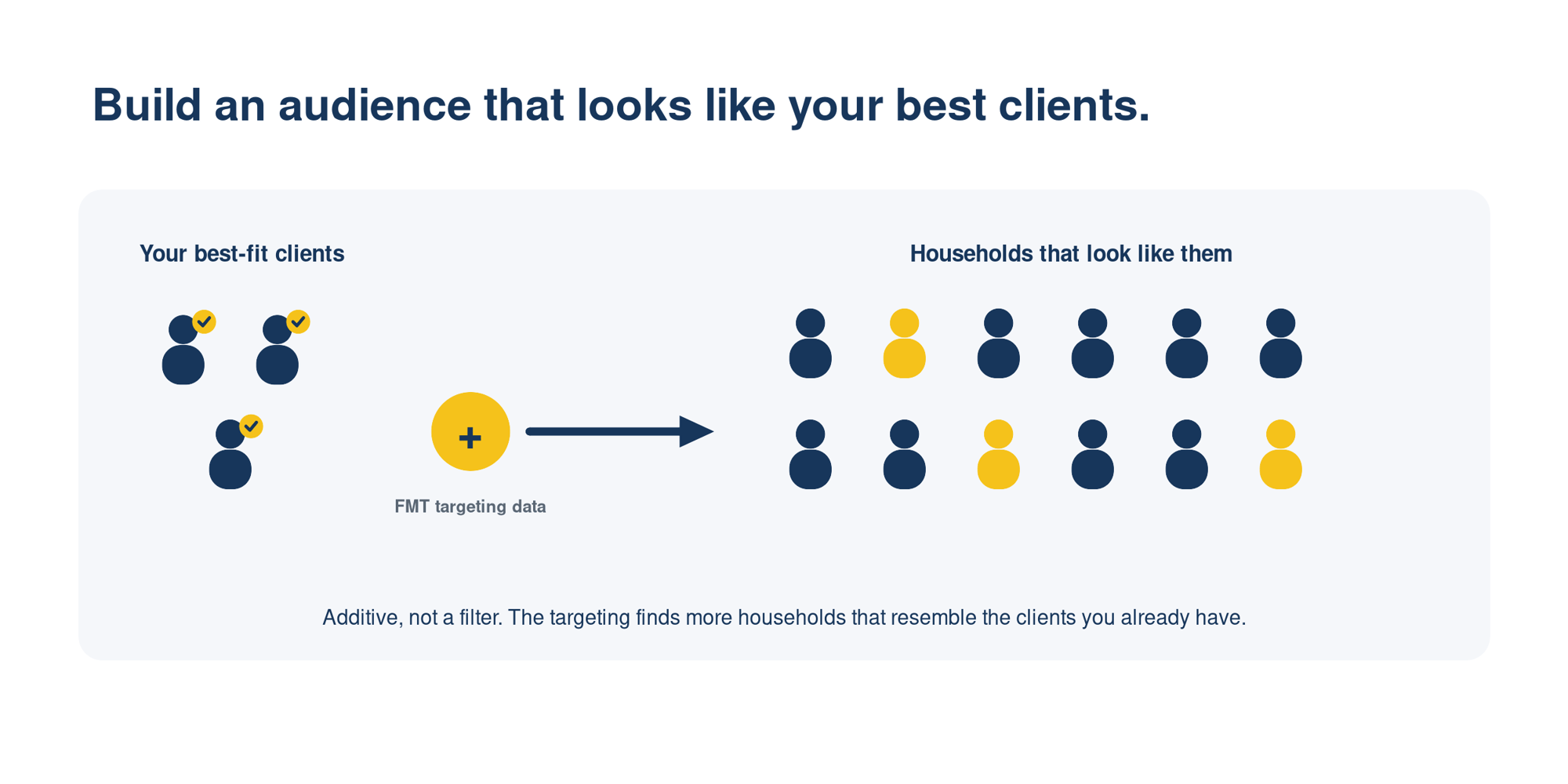
You are not filtering people out. You are building an audience that looks like the clients who already fit.
The Invitation Speaks to the Person You Chose
Once you know who the room is for and how to reach them, the invitation carries the next piece of the work. An invitation written for the situation you defined speaks directly to the person in it. Someone in that first stretch of retirement, unsure how to create income, recognizes an event built for exactly where they are and signs up. The invitation is not trying to appeal to everyone. It is trying to be unmistakable to the people it was written for.
Decide It Once, Then Sharpen It
The audience decision is not a one-time guess. It is the part of the process most worth refining. After each event, the picture gets clearer: which households showed up, which engaged, which turned into conversations. That information sharpens the next audience, and the one after that.
An advisor who treats audience building as a repeatable, improving practice ends up with targeting that gets more accurate every cycle. That compounding precision is hard for anyone else to copy, and quietly valuable.
The Room Is Decided Before the Invite Goes Out
It is tempting to believe a strong presentation can win any room. It cannot. An audience assembled without care puts a ceiling on everything that follows, no matter how good the teaching is. The advisors who consistently turn events into better-fit clients have simply moved the most important decision to the front, where it belongs: building an audience that looks like the clients who already fit, and reaching them on purpose.
Get that right and the rest of the event has something to work with. Get it wrong and you are teaching well to the wrong people.
See How Education-Led Marketing Works
Learn how advisors use FINRA-reviewed courses and repeatable campaigns to attract better-qualified prospects.