- Retention, not acquisition, is where most of a practice’s economic value is created.
- A client who signed up because the approach fit their situation is far more durable than one who did not.
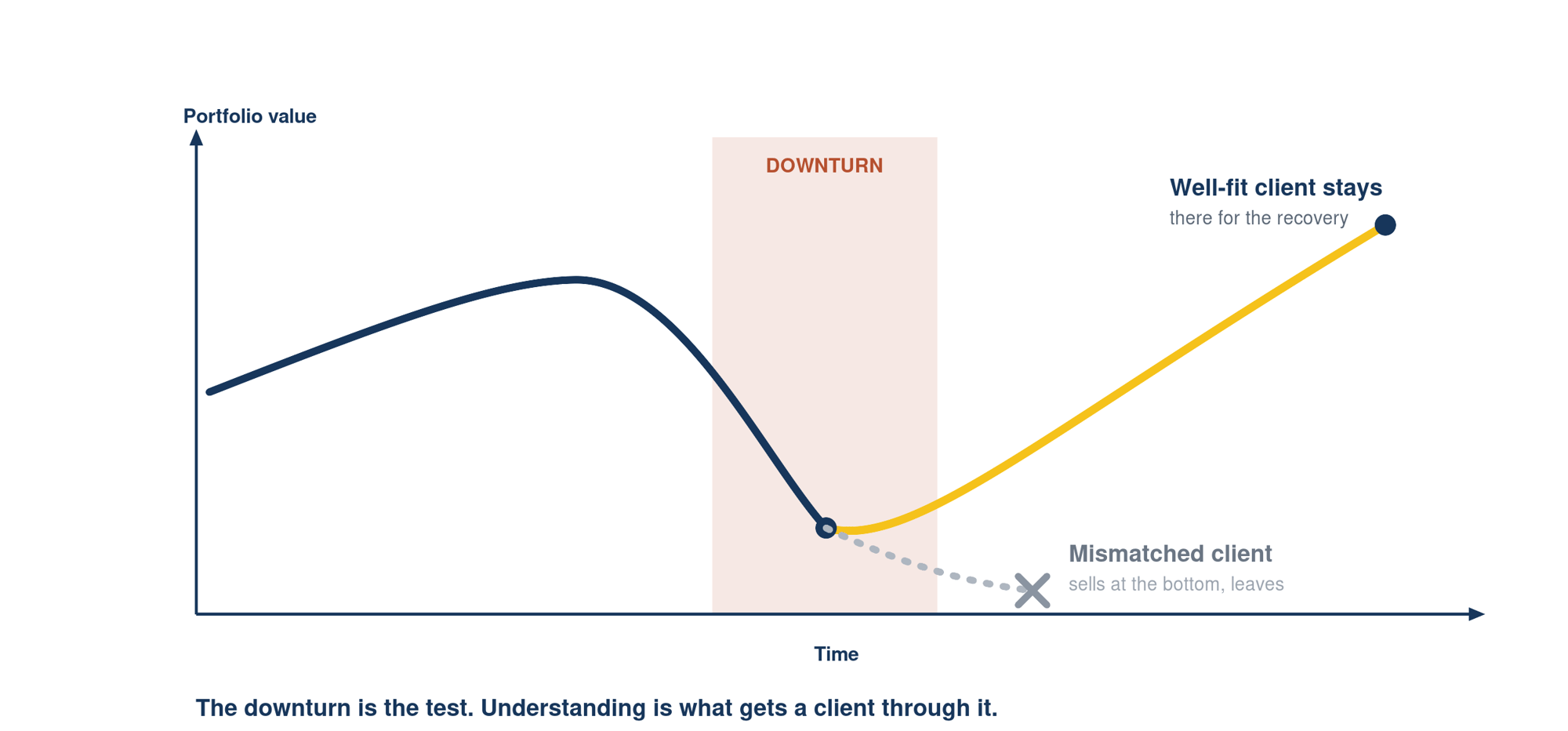
- The real retention test is a market downturn, and understanding is what gets a client through it.
- Education-led acquisition builds the understanding that keeps clients steady when performance wobbles.
- The way clients are acquired largely determines how many are retained.
Better-Fit Clients Don’t Just Convert. They Stay.
Fit at acquisition is the best predictor of retention, and retention is where the economics of a practice live.

Most of the attention in growing a practice goes to acquisition: filling the pipeline, booking the meetings, winning the client. Far less goes to the quieter question of whether those clients are still around in five years. That is backwards. A client kept is worth far more than a client won, and the single best predictor of whether a client stays is something decided at the very beginning: whether the advisor’s approach actually fit their situation when they signed on. Fit is not only an acquisition advantage. It is a retention strategy.
A client kept is worth more than a client won, and fit is what decides which you have.
Key Takeaways
Retention Is Where the Economics Live
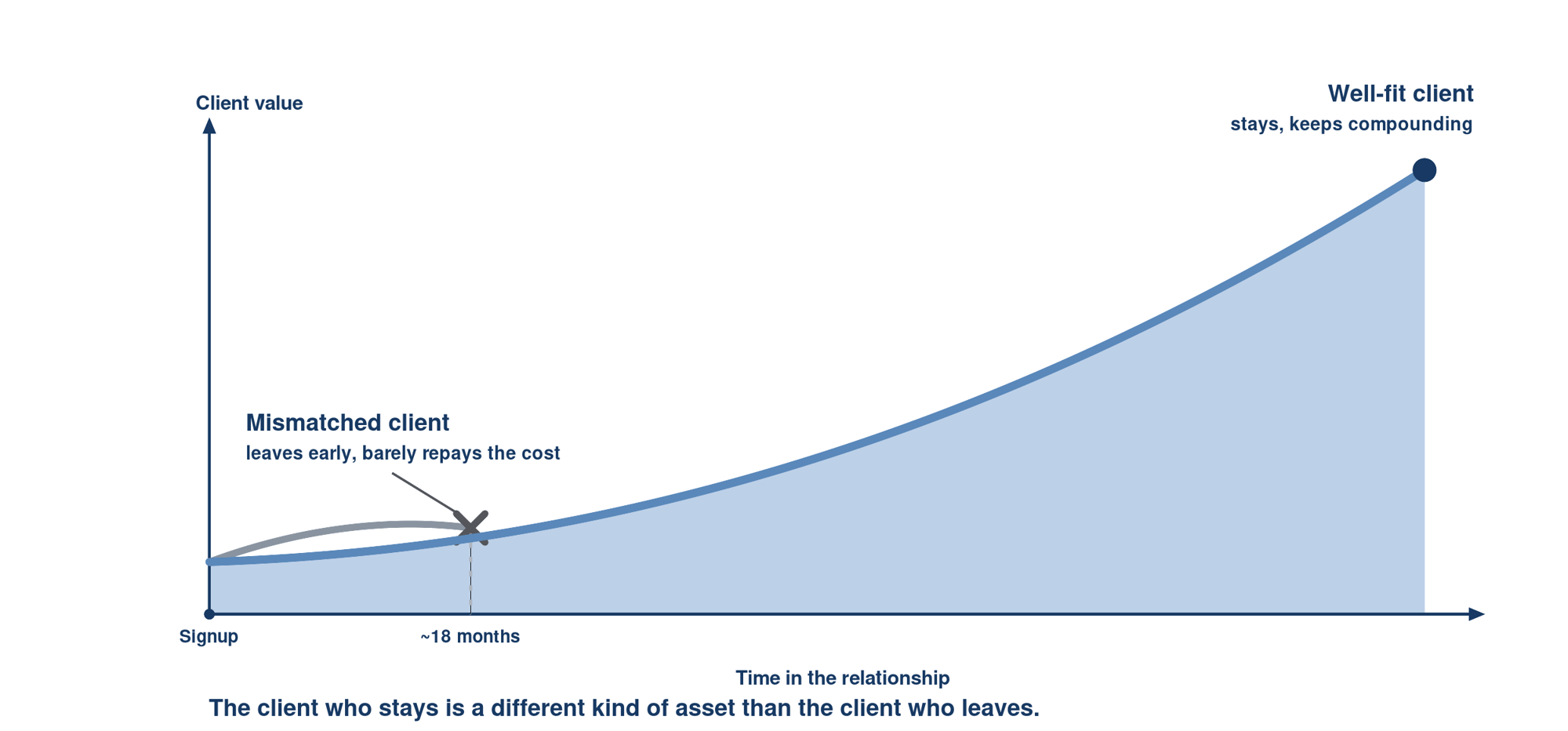
Winning a client is expensive. The marketing, the events, the meetings, and the hours all get spent before the relationship produces anything. The return arrives later, over years of a relationship that deepens and grows. A client who leaves after eighteen months has barely repaid the cost of acquiring them. A client who stays for fifteen years is a different kind of asset entirely. Two practices can acquire clients at the same rate and end up in completely different places, purely on the strength of who stays. Retention is not a footnote to growth. It is most of it.

Fit Is Bought at Acquisition, Not Repaired Later
There is a temptation to treat retention as a service problem, something to fix with better check-ins and a smoother experience after the fact. Those things help, but they cannot rescue a relationship that was mismatched from the start. A client who chose an advisor because the approach genuinely fit their situation begins aligned, and stays aligned through the ordinary friction of a long relationship. A client who was sold, who signed up for reasons that had little to do with fit, was always going to be at risk, and no amount of attentive service fully removes that risk. Retention is decided, in large part, before the client ever signs.
The Test Comes When Markets Get Uncomfortable
Every client relationship looks fine when markets are calm. The test comes when they are not. A downturn is when mismatched clients leave, because the only thing holding them was performance, and performance just disappeared. A well-fit client behaves differently. Having chosen the approach because it suited their situation, and having understood it before they signed, they are far more likely to hold steady when the statements turn red. The volatility that flushes out weak relationships tends to leave the well-fit ones intact.

Understanding Is the Retention Mechanism
This is where education-led acquisition earns its keep twice. A prospect who became a client after learning the reasoning, the tradeoffs, and the philosophy behind the approach did not buy a promise of returns. They bought an understanding. When markets get hard, that understanding is what steadies them. They know why the plan is built the way it is, so a bad quarter reads as expected rather than alarming. Trust built by teaching is sturdier than trust built by a pitch, precisely because it rests on comprehension instead of persuasion. The client who understands why does not panic at the first sign of trouble.
What Retention Is Worth Over Time
The value of keeping well-fit clients compounds in every direction. Relationships that last accumulate assets rather than restart from zero. A client who stays does not have to be replaced, which quietly saves the acquisition cost of the client an advisor would otherwise need just to hold steady. And clients who chose an advisor because the fit was right tend to send along people who resemble them, which starts the next relationship from a position of fit as well. The lifetime value of a well-matched client is not marginally better than a quick, mismatched win. It is a different order of magnitude.
Better Retention Starts Upstream
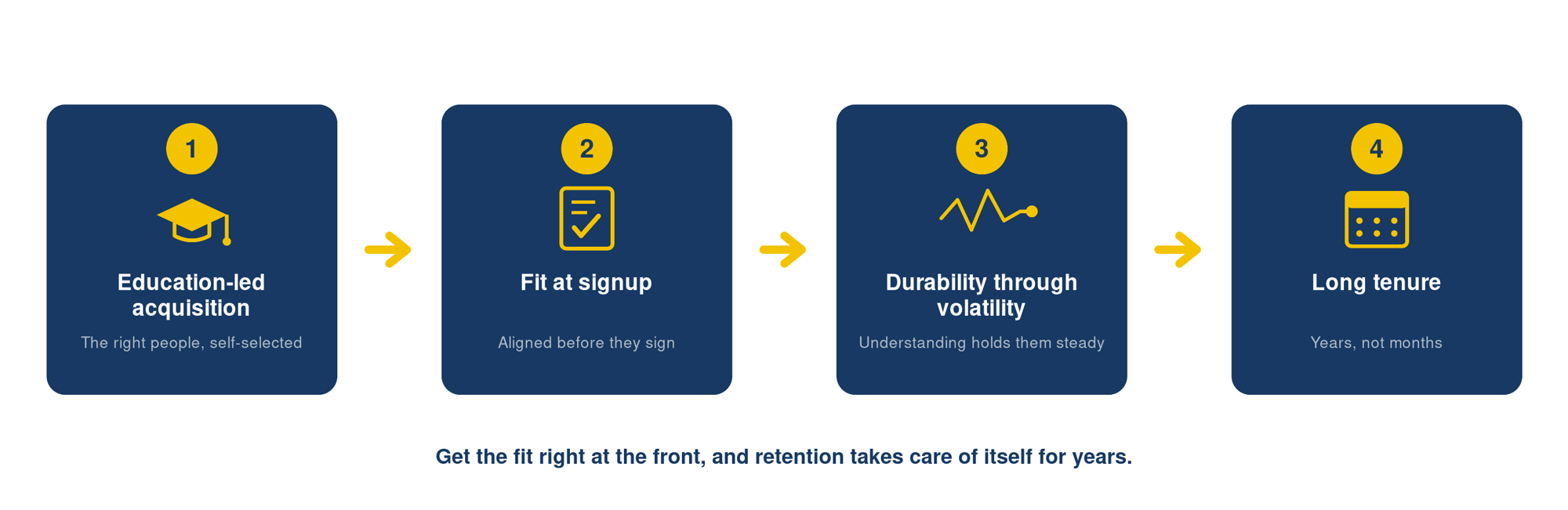
All of which means retention is not only, or even mainly, a back-office discipline. It is a consequence of acquisition quality. Practices that struggle to keep clients often do not have a service problem. They have an acquisition problem: bringing in people who were never a good fit and then working hard to hold on to them. Education-led events change the input. Because they attract people who self-select on situation and stay only if the approach genuinely resonates, they produce clients who were well-fit before they signed. Fix the fit at the front, and retention gets easier for years afterward.

Staying Is Where the Practice Is Built
It is natural to measure a practice by how many clients it wins. The more telling number is how many it keeps, and for how long. Those clients, the ones who stay through good markets and bad, are overwhelmingly the ones who were a genuine fit from the start and who understood what they were choosing. Education-led acquisition is how you find them and how you help them understand. Better-fit clients do not just convert. They stay, and staying is where a practice is actually built.
See How Education-Led Marketing Works
Related Content