- The instinct to split a room into “raised a hand” and “didn’t” throws away useful information on both sides.
- Some hand-raisers are merely curious; some quiet attendees are seriously interested but private.
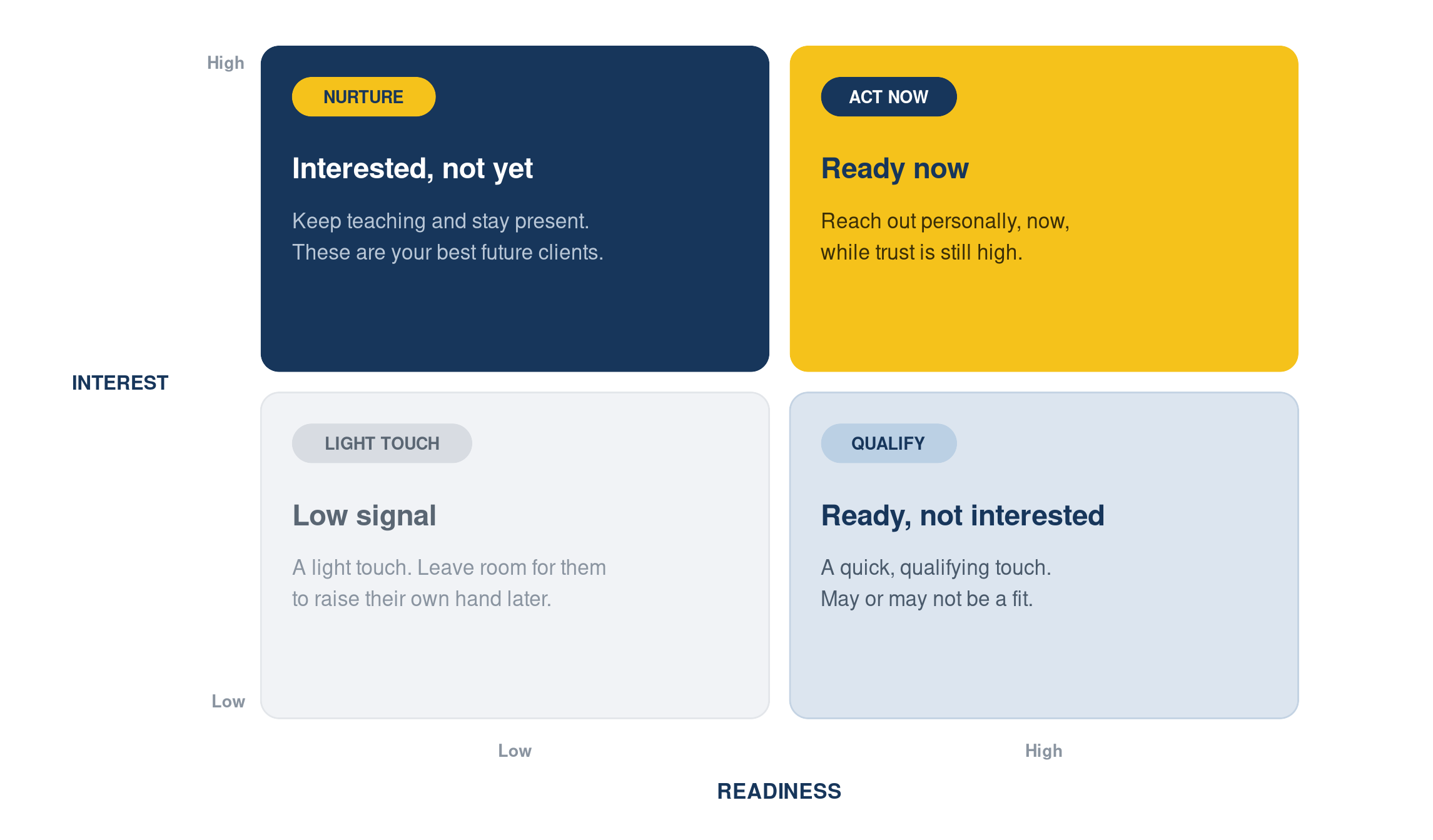
- Read interest and readiness as two different things, and prioritize on both.
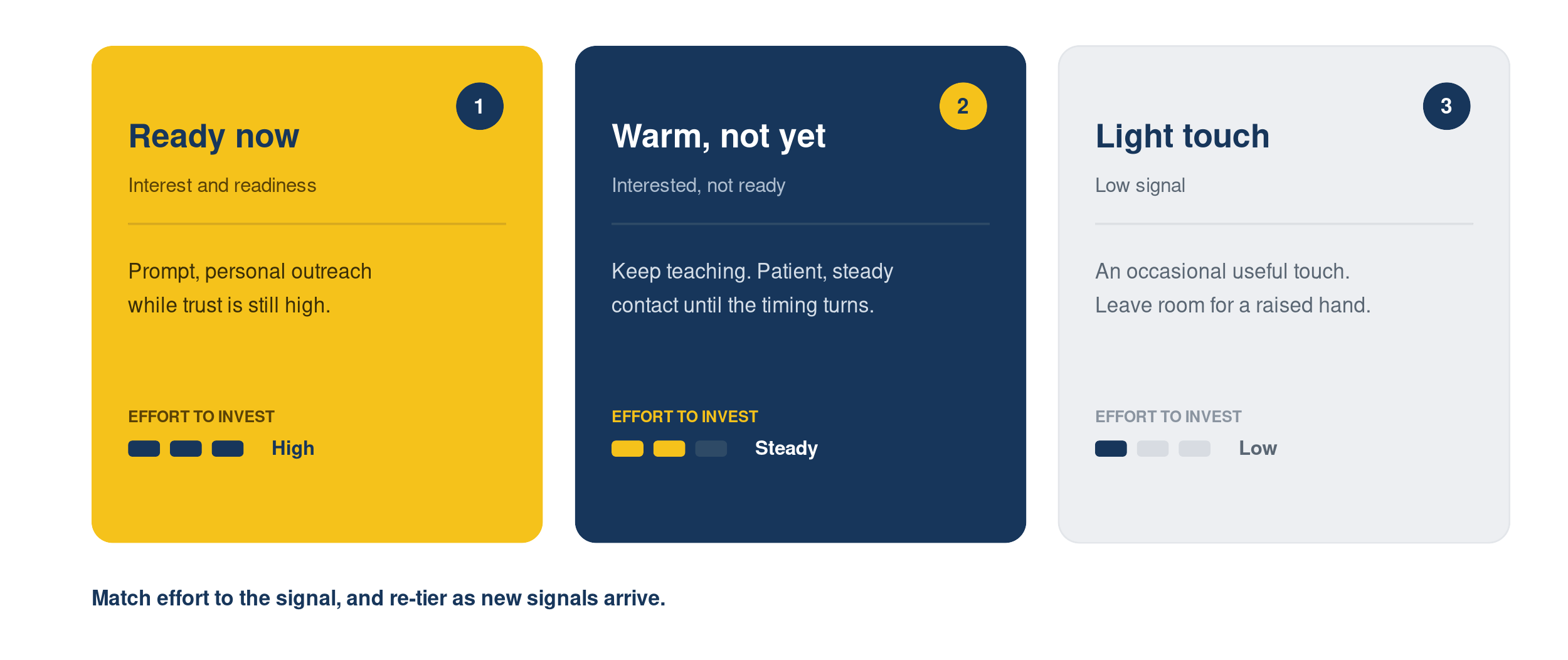
- Sort follow-up into tiers matched to the signals, rather than a single yes or no.
- Treat engagement as something that updates over time, not a verdict fixed on the night.
Not Every Raised Hand Is Ready, and Not Every Silence Is a No
A practical way to read the room after the room, and prioritize follow-up without writing anyone off.

Nick Schilling
CEO
When an event ends, most advisors sort the room in about ten seconds. The people who booked a meeting, handed back a card, or came up with a question go in one pile. Everyone else goes in the other. The first pile gets the follow-up. The second gets forgotten. We have made the case before that this is a costly habit, because the attendees who stayed quiet are not gone. But knowing not to write them off is different from knowing what to do instead. The answer is not to treat everyone the same. It is to read the signals more carefully and prioritize on what they actually tell you.
A raised hand is a signal, not a guarantee. Silence is a signal too.
Key Takeaways
The Two-Bucket Habit, and Why It Fails
The reflex to sort attendees into responders and non-responders feels efficient. It is also wrong on both sides. Plenty of people who raise a hand are being polite, or are curious about the topic without being anywhere near a decision. Chase them hard and you spend your best effort on prospects who were never close. Meanwhile, some of the quietest people in the room are the most serious. They do not perform their interest. They take it home to think about. Write them off because they did not fill out a card and you discard some of your best future clients.
Read the Whole Spectrum of Signals
Attendance leaves far more evidence than a response card captures. Someone who asked a specific question about their own situation told you more than someone who booked a generic follow-up. So did the person who stayed afterward to talk, who took real notes, who brought a spouse, or who asked how the material applied to a decision they are actually facing. On the other end, a general question, an early exit, or a clear focus on the refreshments points the other way. The point is not to build a rigid scoring sheet. It is to notice that engagement runs along a range, and to read the whole range instead of one checkbox.
Interest Is Not the Same as Readiness
Two questions decide how to treat an attendee, and they are easy to confuse. The first is interest: does this person care about the topic and their own situation around it? The second is readiness: are they in a position to do something about it soon? They come apart often. A high-interest, not-yet-ready attendee is a strong future client who simply needs time. A hand-raiser who is interested in the free lunch and little else is not, no matter how eager they seemed. Sorting on both questions, rather than on who spoke up, is what separates useful follow-up from wasted effort.
Tier the Follow-Up, Do Not Rank It Once
Prioritizing does not mean picking winners and discarding the rest. It means matching effort to signal. A workable approach is three tiers. The people showing both interest and readiness get prompt, personal outreach while the warmth is high. The interested-but-not-yet group gets continued, patient contact that keeps teaching and stays present without pressure. The low-signal group gets a light touch and the room to raise their own hand later. Everyone stays in. The difference is how much of your limited time each tier earns right now.
The Quiet Ones Are a Pipeline, Not a Write-Off
The private, interested attendee is often the most valuable person in the room, and the easiest to lose by misreading. They are not ignoring you. They are deciding on their own timeline, which for major financial decisions is usually longer than an advisor would like. Push them and they retreat. Keep teaching them and they tend to come back further along than any cold lead could be. Reading them correctly means keeping them in the pipeline and continuing the relationship, not chasing them for a commitment they are not ready to make.
Let the Signals Update Themselves
The read you take on the night is a starting point, not a verdict. Engagement keeps revealing itself. A quiet attendee who opens every follow-up note and clicks through the resource you sent is telling you their interest is real, even though they said nothing in the room. An enthusiastic hand-raiser who goes silent afterward is telling you something too. The advisors who get the most from a room revisit their tiers as new signals arrive, and move people up or down accordingly. That is what turns a single event into a pipeline that keeps sorting itself long after the lights go off.
Grow From the Whole Room
The easy way to read a room is to count the raised hands. The accurate way is to read everyone, separate interest from readiness, and match your follow-up to what each person is actually signaling. Do that and you stop spending your best effort on the merely polite, and you stop losing the quiet prospects who were interested all along. Not every raised hand is ready. Not every silence is a no. The advisors who internalize both grow from the whole room, not just the front row.
See How Education-Led Marketing Works
Learn how advisors use FINRA-reviewed courses and repeatable campaigns to attract better-qualified prospects.