- The days right after an event are when trust is highest and attendees are most ready to act.
- Two mistakes waste that window: following up too slowly, and switching from teacher to salesperson.
- The follow-up should feel like the class continued, the same helpful voice, not a pitch.
- Make the next step small, relevant, and easy to say yes to.
- Plan the follow-up before the event, so speed does not depend on scrambling afterward.
The 72 Hours After Class
The follow-up window is short, and it decides how many attendees become conversations.

Nick Schilling
CEO
The room empties, everyone says good night, and the advisor files the event under done. That instinct quietly undoes a lot of good work. The teaching may be finished, but the most valuable part of an education-led event happens after it, in the two or three days while the experience is still fresh. That is when an attendee is most inclined to take a next step, and when most advisors do the least. What happens in those 72 hours determines how many people in the room become actual conversations.
The class ends, but the event is not over. The next 72 hours decide what it was worth.
Key Takeaways
Trust Has a Half-Life
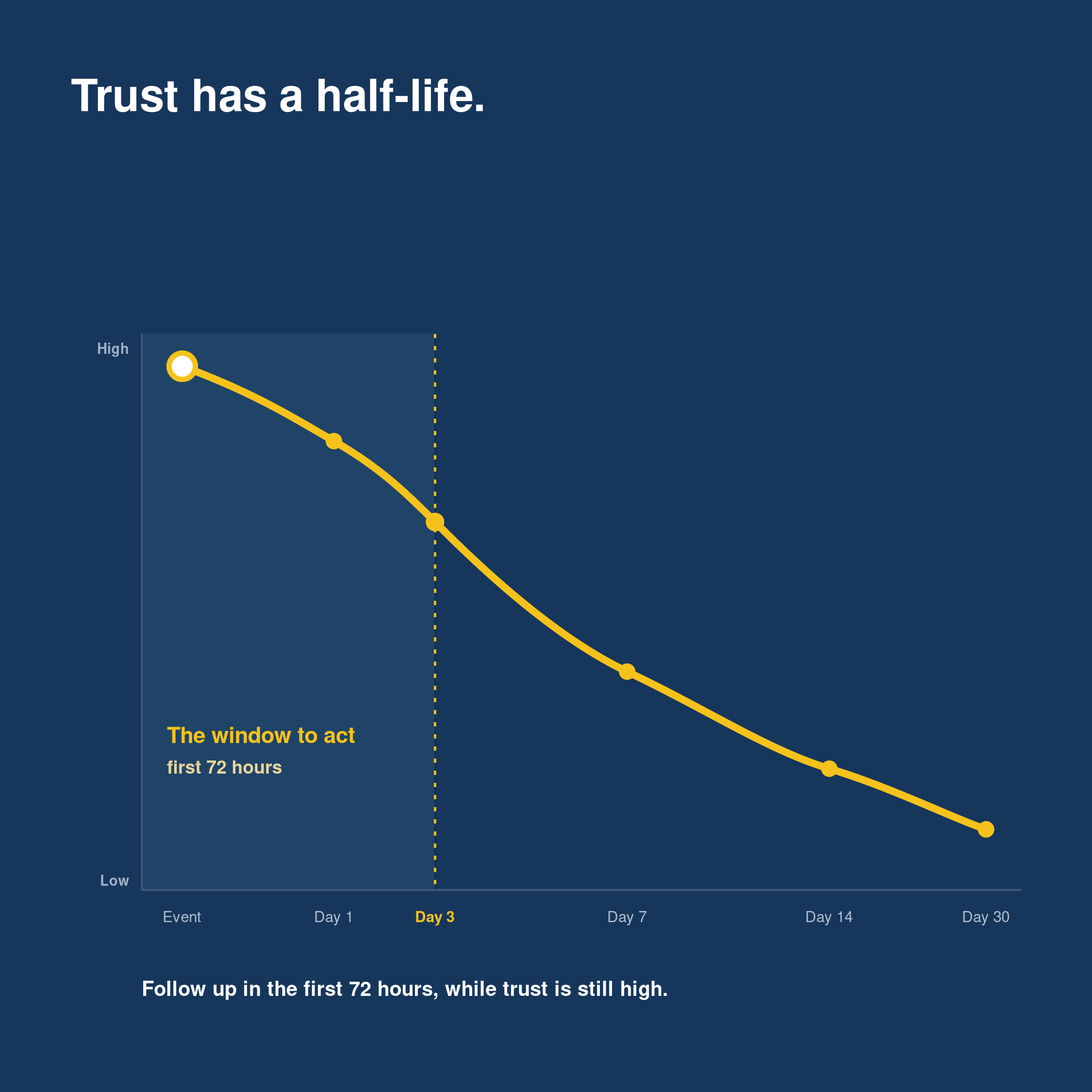
A good class produces a burst of goodwill. The attendee just spent an hour or two with an advisor who taught them something useful, asked nothing of them, and clearly knew the material. In that moment they are as warm toward the advisor as they will ever be. That warmth is not permanent. It fades a little each day, as normal life crowds back in and the specifics of the evening blur. Follow up while it is high and a conversation feels natural. Wait a week and you are starting closer to cold.
The Two Ways Advisors Waste It
Most missed follow-ups fail in one of two ways.
The first is silence, or something close to it. The advisor means to reach out, then a busy week passes, and by the time a message goes out the moment has cooled. The attendee has moved on.
The second is louder. The advisor follows up quickly but changes character, trading the patient educator from the front of the room for a salesperson chasing an appointment. The prospect notices the switch immediately. The person they trusted was a teacher, and now that teacher is selling. Nothing dissolves goodwill faster than the sense of a bait and switch.
Continue the Teaching, Do Not Switch Modes
The follow-up that works feels like the class kept going. Same voice, same helpfulness, same focus on the attendee’s situation rather than the advisor’s calendar. It picks up a thread from the event, answers a question the room raised, or shares the resource that was promised. The message a prospect should take from your follow-up is that you are still teaching, still useful, and still not in a hurry to sell them anything.
That consistency is the whole point of education-led growth. Trust was built by teaching, so it is kept by teaching. The moment the follow-up abandons that posture, it gives back the advantage the event created.
Make the Next Step Small and Obvious
Continuing the relationship still means offering a next step. The difference is how the step is framed. Instead of a push for a sales meeting, offer a low-friction continuation: a conversation to apply what they learned to their own numbers, a short review, a chance to get their specific questions answered. Framed as more help, it reads as a natural extension of the class. Framed as a pitch, the same offer reads as the catch they were watching for.
Keep the step small. A prospect who is not ready to commit to a full planning engagement may happily say yes to a focused, no-pressure conversation about the one thing that is worrying them. Small yeses are how warm attendees become clients, and a good follow-up asks for a small one.
What to Actually Do in the First 72 Hours
The sequence is simple and worth running every time:
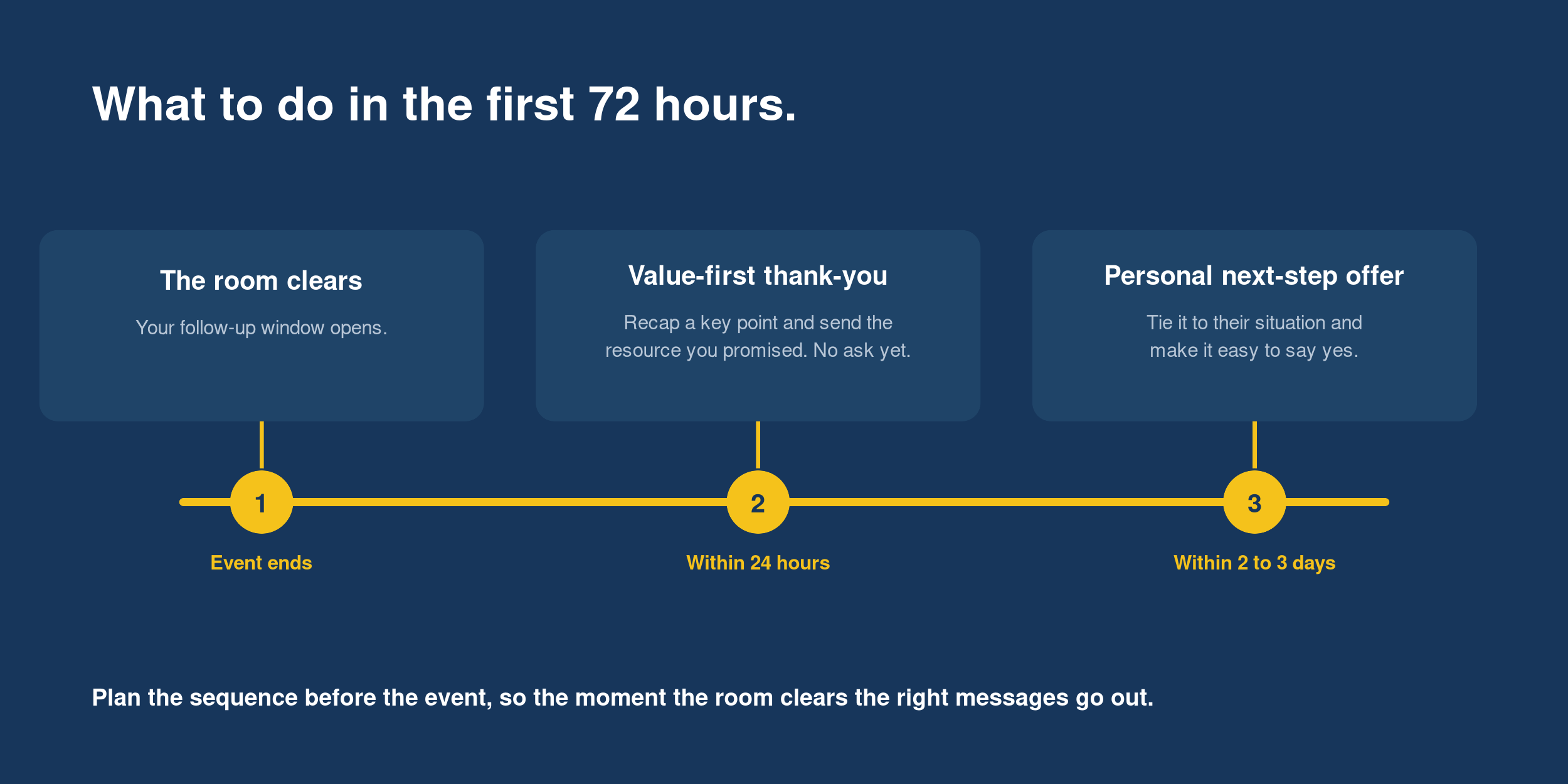
- Within a day, send a thank-you that continues the teaching. Recap a key point, include the resource you promised, and remind them what problem the material helps them solve. No ask yet, just value.
- Within two to three days, make the next step personal and specific. Reference their situation where you can and offer the low-friction conversation as a way to go deeper on what matters to them. Make it easy to schedule.
- Keep every message about them. The test for any follow-up line is whether it sounds like help or like a sales script. If it is the latter, rewrite it.
None of this takes more effort than a hurried, generic email. It takes deciding in advance what to send, so the window is used instead of missed.
Speed and Relevance Together
Fast follow-up beats slow, and relevant beats generic, but the two only work together. A same-day message that is clearly a template does little. A thoughtful, personal note that arrives a week late has missed the warmth. The advisors who convert the most attendees have their follow-up built before the event begins, so that the moment the room clears, the right messages can go out quickly and still feel personal. The follow-up is not an afterthought to the event. It is part of the system the event was always meant to feed.
A Full Room Becomes a Full Calendar
An education-led event earns its return in the days right after it, not the night of. The teaching creates trust; the 72 hours that follow decide whether that trust turns into a conversation or fades back into a name on a list. Treat that window as part of the event, continue being the teacher the room already trusts, and make the next step easy. That is how a full room becomes a full calendar.
See How Education-Led Marketing Works
Learn how advisors use FINRA-reviewed courses and repeatable campaigns to attract better-qualified prospects.