- The strongest referrals are unprompted, from clients who understand and trust the approach.
- Asking transactionally can strain the relationship and rarely produces the best introductions.
- A client can only refer well if they can explain your value, and teaching is what gives them the words.
- Education-led clients refer people like themselves, so their referrals arrive already well-fit.
- Referrals grow from referable relationships, not from referral campaigns.
The Referral You Didn’t Have to Ask For
The best referrals are a byproduct of teaching, not the output of a campaign.

Most referral advice is some version of “ask more often.” Build a referral program, work the ask into review meetings, offer an incentive, rehearse a script. It treats referrals as something you extract from clients with the right technique. The most valuable referrals do not work that way. They come unprompted, from clients who understand what you do and trust it enough to send someone they care about. You cannot script that. You can only earn it, and teaching is how.
The best referral is the one a client makes before you ever think to ask.
Key Takeaways
Why the Ask So Often Backfires
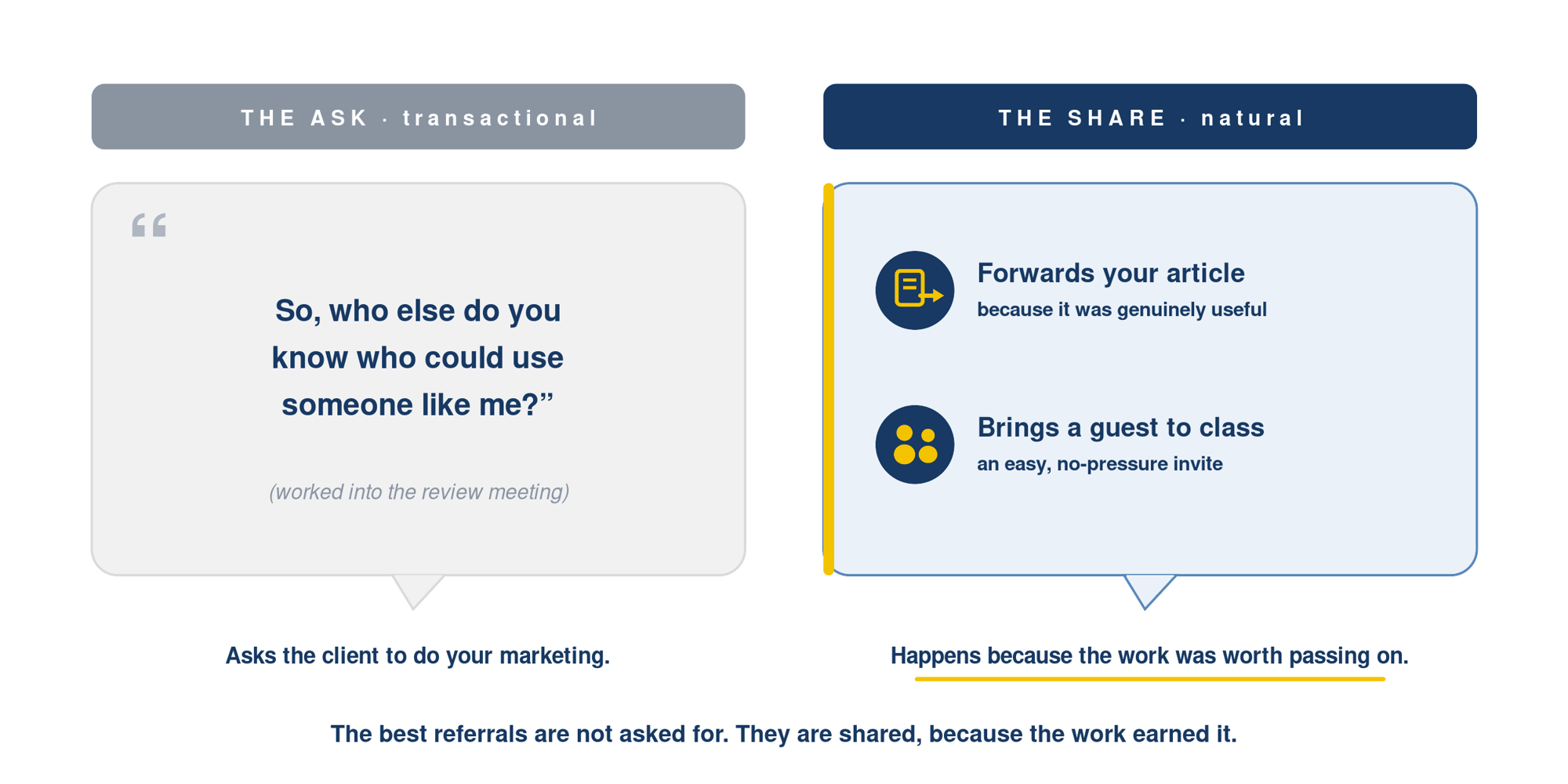
There is a reason many advisors feel awkward asking for referrals. The ask can quietly change the relationship. A client who came to you for guidance is suddenly being asked to do your marketing, and the request, however politely framed, carries a whiff of the sales dynamic that education-led growth was supposed to avoid. Push too hard and you spend down the trust you built. The irony is that the harder you have to ask, the weaker the underlying relationship probably is. Referrals that require pressure are a symptom, not a strategy.
An Educated Client Can Actually Explain You
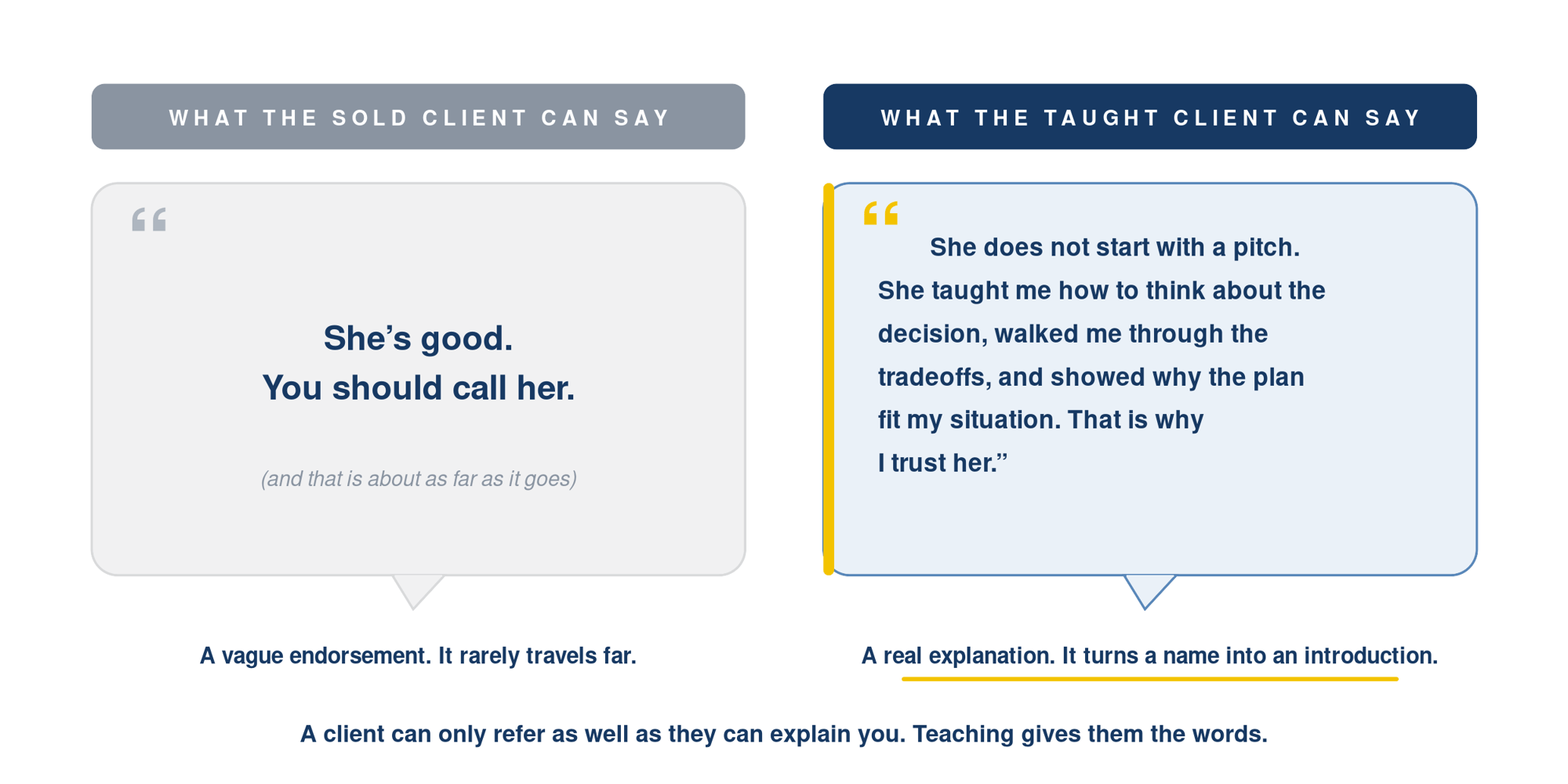
A referral only travels as far as the client can carry it. When a client tries to recommend an advisor, they have to say something about why. A client who was sold can usually manage only a vague endorsement: “she’s good, you should call her.” A client who was taught can do much more. They absorbed the reasoning and the philosophy, so they can tell a friend what makes the approach different and why it mattered for them. That explanation is what turns a name into a real introduction. Teaching does not just build trust with the client. It equips them to pass that trust along.

They Refer People Like Themselves
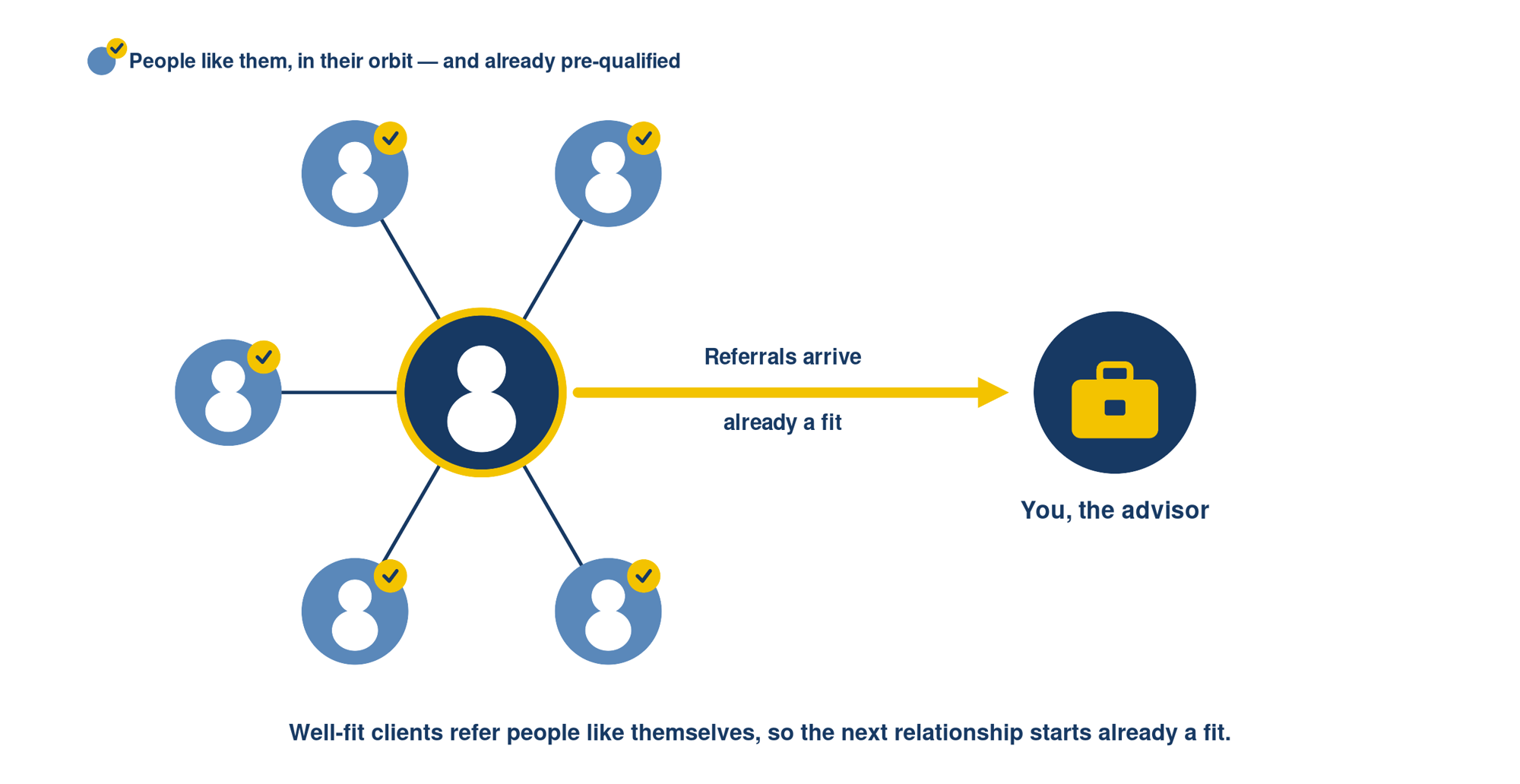
Here is the part that compounds. Because education-led clients chose the advisor on the strength of a shared situation, the people in their lives who share that situation are natural fits too. A pre-retiree who valued a class on turning savings into income knows other pre-retirees wrestling with the same question. When they refer, they refer into fit. The introductions that arrive this way are not random names. They are more of the exact people the practice is built to serve, which is why referrals from well-fit clients tend to become well-fit clients.

Teaching Gives Clients Something to Share
Asking a client to talk you up is awkward. Handing them something genuinely useful to pass along is not. This is the quiet advantage of an education-led relationship: it produces a steady supply of shareable things. A clear article on a decision their friend is facing. An invitation to bring someone to the next class. A resource worth forwarding. The client does not have to sell anyone. They just pass along something helpful, and the teaching does the introducing. The event itself is often the most natural referral vehicle there is, because bringing a friend to learn asks nothing of either of them.
Make It Natural, Not a Campaign
None of this means doing nothing and hoping. It means lowering the friction on a referral that already wants to happen rather than manufacturing one that does not. Invite clients to bring a guest to the next event. Keep sending education worth forwarding. Make it easy and normal to include someone else. The difference between this and a referral program is the posture: you are not asking clients to sell for you, you are giving them easy ways to share something they already value.

Grow Referable Relationships, Not Referral Campaigns
The reframe is simple. Stop trying to extract more referrals and start producing more referable relationships. A referable relationship is one where the client understands the value, trusts the advisor, and has useful things to share. Teaching and fit produce exactly that, and the referrals follow on their own. They also improve over time, because each well-fit referred client becomes another educated client who can refer the next one. That is a compounding source of growth, and it runs quietly in the background of a practice that teaches.
The Most Reliable Way a Practice Grows
The advisors with the strongest referral flow are rarely the ones asking the most. They are the ones whose clients understand what they do, trust it, and have something worth sharing. That is not a referral tactic. It is the natural result of building relationships on teaching and fit. Earn those, and the referral you did not have to ask for becomes the most reliable way the practice grows.
See How Education-Led Marketing Works
Related Content