- A registration is a low-commitment yes; attendance is earned in the days that follow.
- The gap between RSVPs and attendance is where most event value quietly leaks out.
- FMT sends the registration confirmation, but the pre-event communication that fills seats is yours to own, and the advisors who win at it set a practice and stick to it.
- A registration acknowledgement plus a short pre-class email sequence, covering logistics and inviting questions, is a strong starting point.
- Paid attendance drastically lowers no-shows, but only when you deliver something worth paying for.
They Registered. Will They Show?
The days between a yes and the event are where most turnout is won or lost.

Nick Schilling
CEO
Getting someone to register feels like the hard part. It is not. A registration is a small, low-cost yes, easy to give and just as easy to forget. The real work starts the moment it comes in, in the stretch of days before the event, where a signup either hardens into attendance or quietly fades. Most advisors treat registration as the finish line. The ones who fill rooms treat it as the starting gun.
A registration is a maybe. The days between are where it becomes a yes.
Key Takeaways
The Leak Between Yes and Attendance
Every no-show was once a registration. Somewhere between signing up and the day of the event, something loosened: the calendar filled, the enthusiasm cooled, the details got lost, or the event simply slipped out of mind. A room that looked full on paper arrives half empty, and every empty seat is marketing spend that produced nothing. The gap between RSVPs and attendance is where most of an event's value leaks out, and it leaks quietly, because nobody calls to say they changed their mind.
Have a Plan, and Stick to It
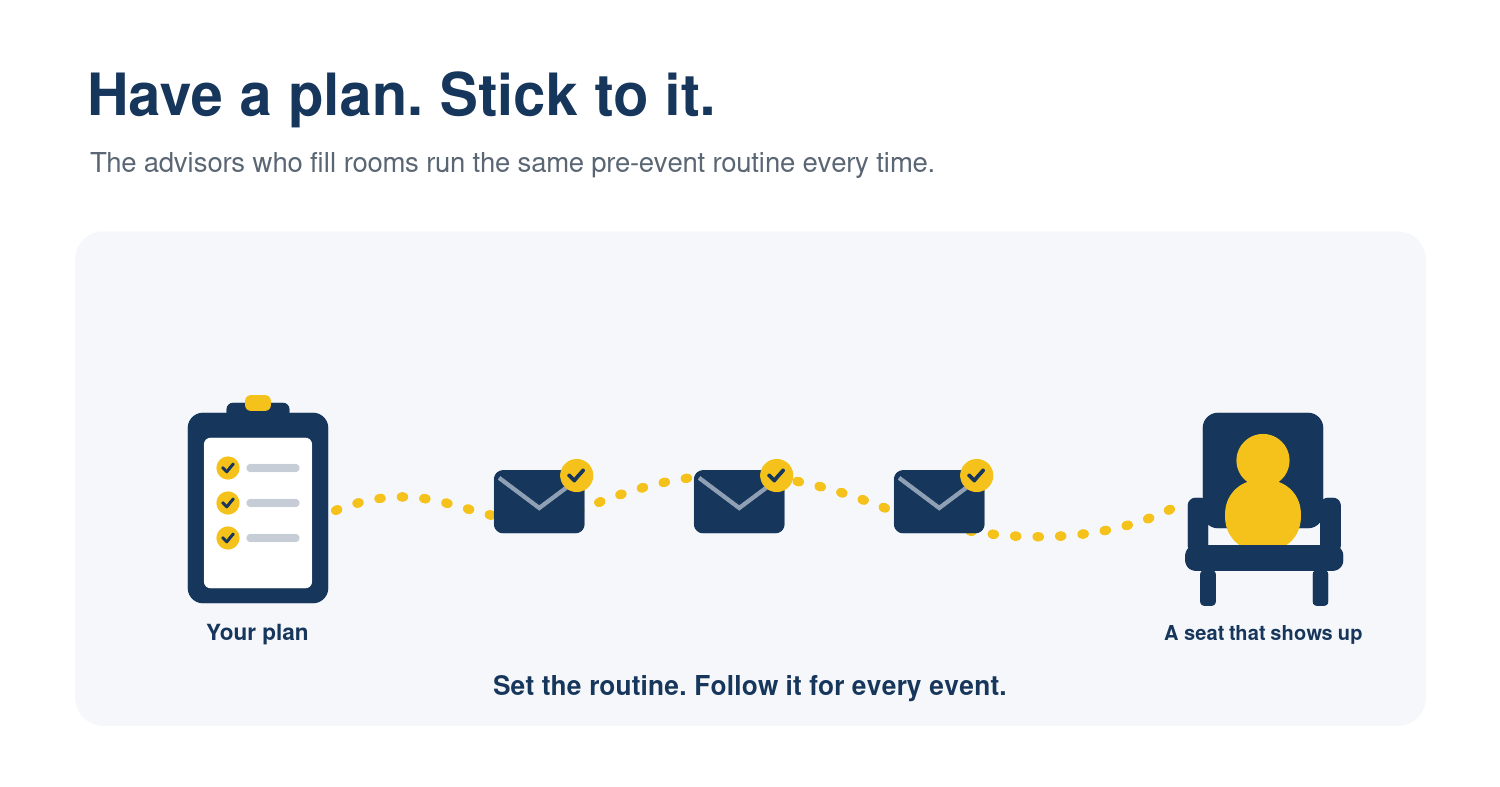
When someone registers, FMT sends a confirmation. What happens after that is the advisor's to own, and it is where attendance is actually won or lost. There is no single right sequence, and no one-size-fits-all. What matters is having a deliberate communication practice and following it for every event, rather than improvising each time.
A strong starting point looks like this: an acknowledgement that goes a step beyond the registration receipt, then a short two-email sequence in the week before the class. Keep it practical. Confirm the logistics, tell people what to expect, and give them an easy way to ask a question before they arrive.
From there, the most effective advisors go further. Shortly after someone registers, or with a longer lead time heading into the class, they ask attendees what is on their mind: a concern, an area of interest, the question they most want answered. Two things happen. The registrant feels seen before they walk in, and the advisor gains real connection points to use in the room. The teaching lands harder when it speaks to what the audience actually came to resolve.
The Window Is a Relationship, Not a Waiting Period
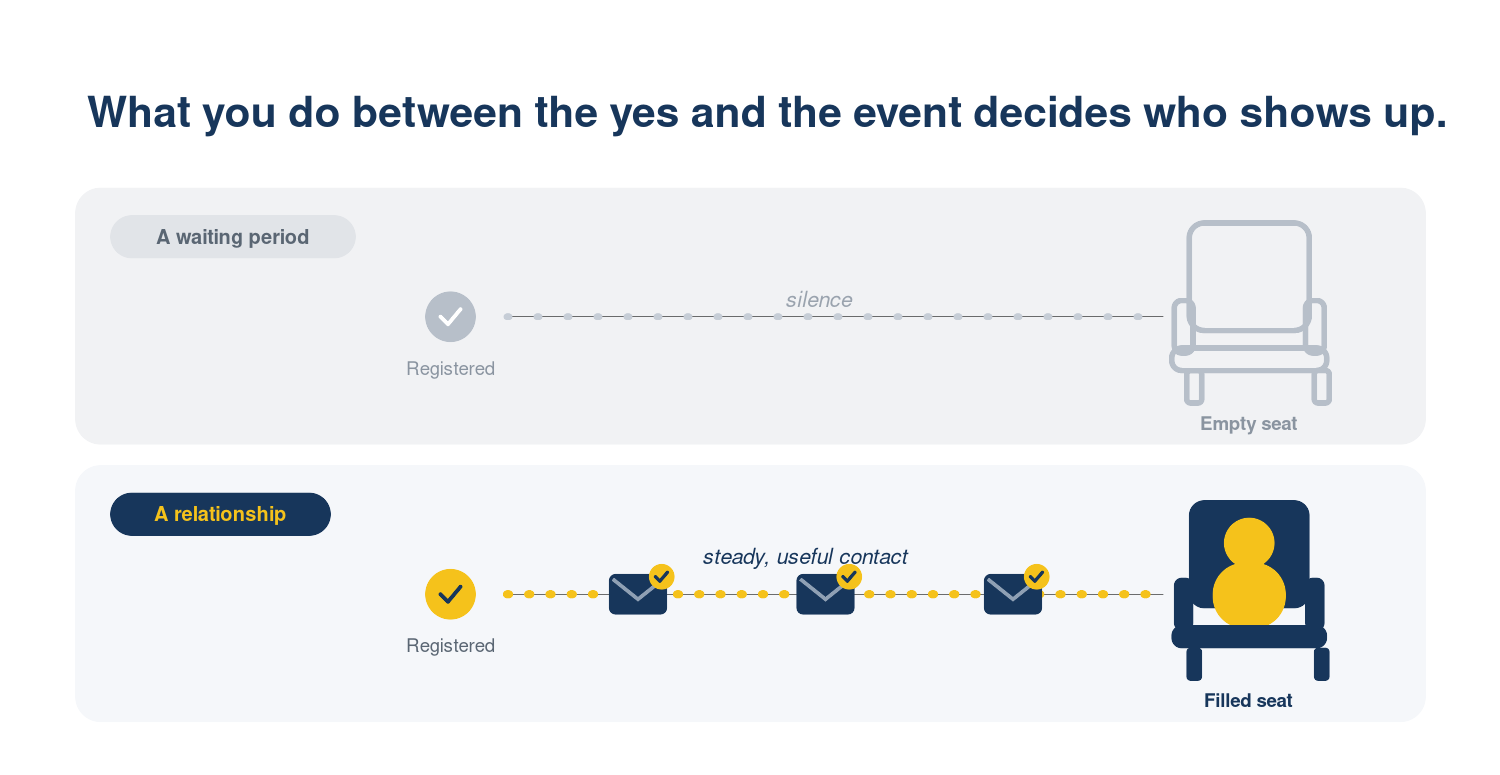
The reason a practice like this works is that the time between registration and event is not dead space. It is the first stretch of the relationship. Silence tells a registrant the event is optional and forgettable. Steady, useful contact tells them it is real, worth their evening, and run by someone who has their act together. That impression forms before the teaching ever starts, and it shapes who bothers to show up.
Paid Attendance: A Tactic That Works
There is one more lever worth naming, because it moves the numbers more than any reminder can. Charging a modest fee to attend drastically lowers no-shows. FMT clients see attendance rates of 90% or more. When someone has paid, even a nominal amount, they tend to show up.
But paid attendance is not a free win. It requires a real commitment from the advisor, because people only pay for something they expect to be worth it. Free can feel like a pitch; paid signals an education worth the price of admission, and that promise has to be kept in the room. Charge for the value, then deliver it. Used that way, a fee is not a barrier to attendance. It is what turns a soft maybe into a firm commitment.
Free can feel like a pitch. Paid signals an education worth the price of admission.
Fill the Seats You Already Won
Filling a room is not mostly about getting more people to register. It is about making sure the people who already said yes actually come. That happens in the days between, through a communication practice you set and keep, and, where it fits, through the commitment that paying to attend creates. Do that well and strong attendance stops looking like luck and starts looking like the natural result of paying attention to the window everyone else ignores.
See How Education-Led Marketing Works
Learn how advisors use FINRA-reviewed courses and repeatable campaigns to attract better-qualified prospects.