What a Year of Teaching Builds That a Year of Ads Can’t

Advertising rents attention. Teaching compounds into a reputation you own.

Nick Schilling
Nick Schilling
CEO

Picture two advisors with the same budget and the same year ahead. One spends it on advertising: steady impressions, a stream of leads, a pipeline that fills as long as the spend continues. The other spends it teaching: a class a month, the same community, the same patient work of explaining things people need to understand. A month in, the two look about even. A year in, they are running different kinds of businesses, and only one of them has built something that keeps working after the year ends.


Advertising rents attention. Teaching earns a reputation, and one of those you keep.

Key Takeaways

  • Advertising buys attention that disappears the moment the spending stops.
  • Teaching builds a reputation that stays and compounds over time.
  • Each class makes the next one easier; ads have to be bought fresh every time.
  • A year of teaching one community makes an advisor known for something, a position money cannot buy.
  • The payoff from teaching is slower and less visible, which is why it is also harder to copy.

Advertising Rents. Teaching Owns.

Advertising is rented attention, and the rent is due continuously. It can be genuinely useful. A well-targeted campaign can fill a room, and getting the right people in the room is no small thing. But the attention it buys lasts exactly as long as the budget does. Stop paying and it vanishes, and next quarter starts from zero again. Teaching works differently. The hour an advisor spends explaining something useful does not evaporate when it ends. It leaves a residue of trust, recognition, and goodwill that stays in the community and accumulates. One is an expense you keep paying. The other is an asset you keep building.

Attention Is Not Reputation

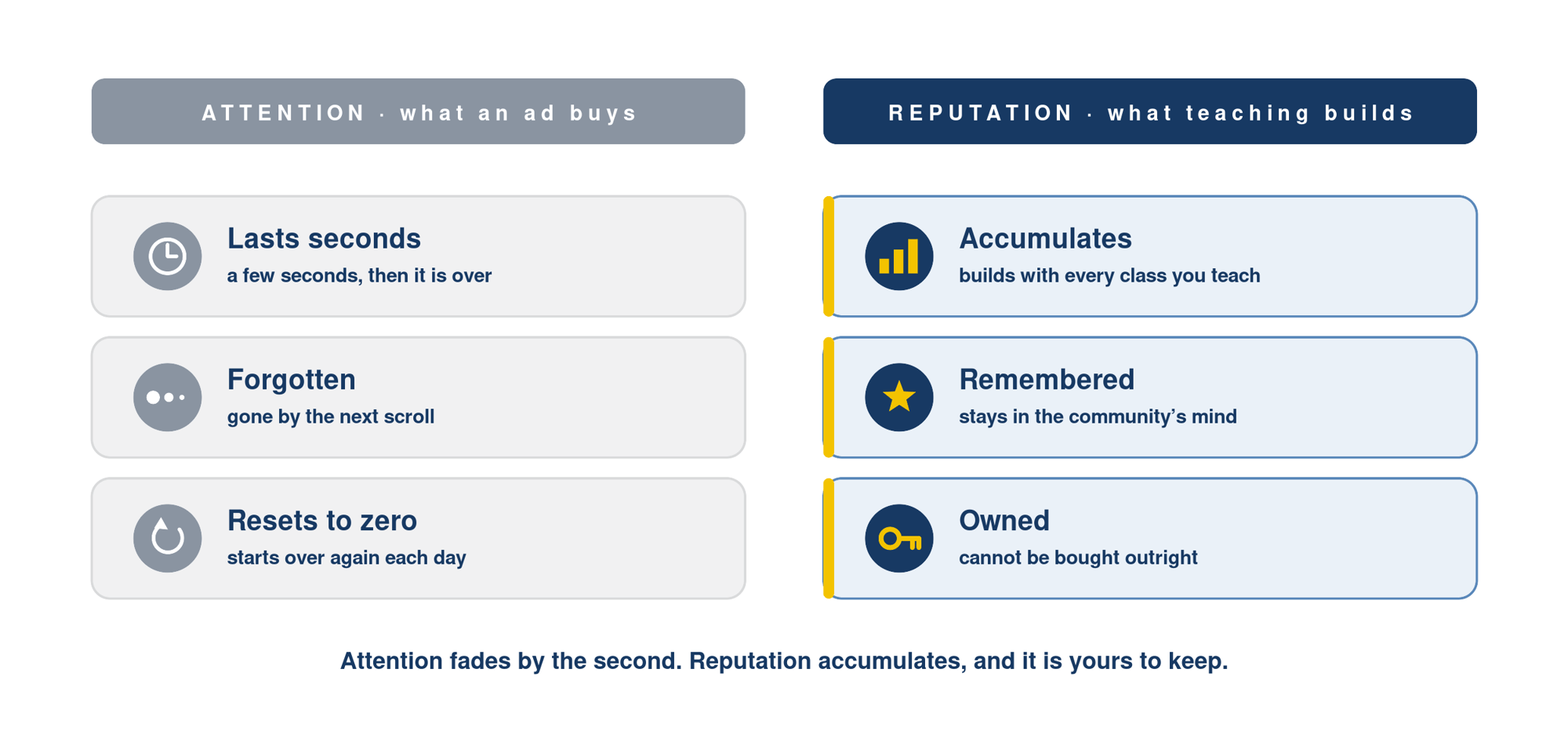
The two are easy to confuse, because both put an advisor in front of people. But attention is fleeting and reputation is durable. An ad earns a few seconds and is forgotten by the next scroll. A class earns something stickier: the sense, in the mind of everyone who attended, that this is the advisor who actually teaches, who explains things clearly, who was helpful before being paid. That impression does not reset each morning. It settles in, and it is the beginning of a reputation, which is the one thing in this business that cannot be purchased outright.

Attention Vs Reputation


Compounding Is the Whole Difference

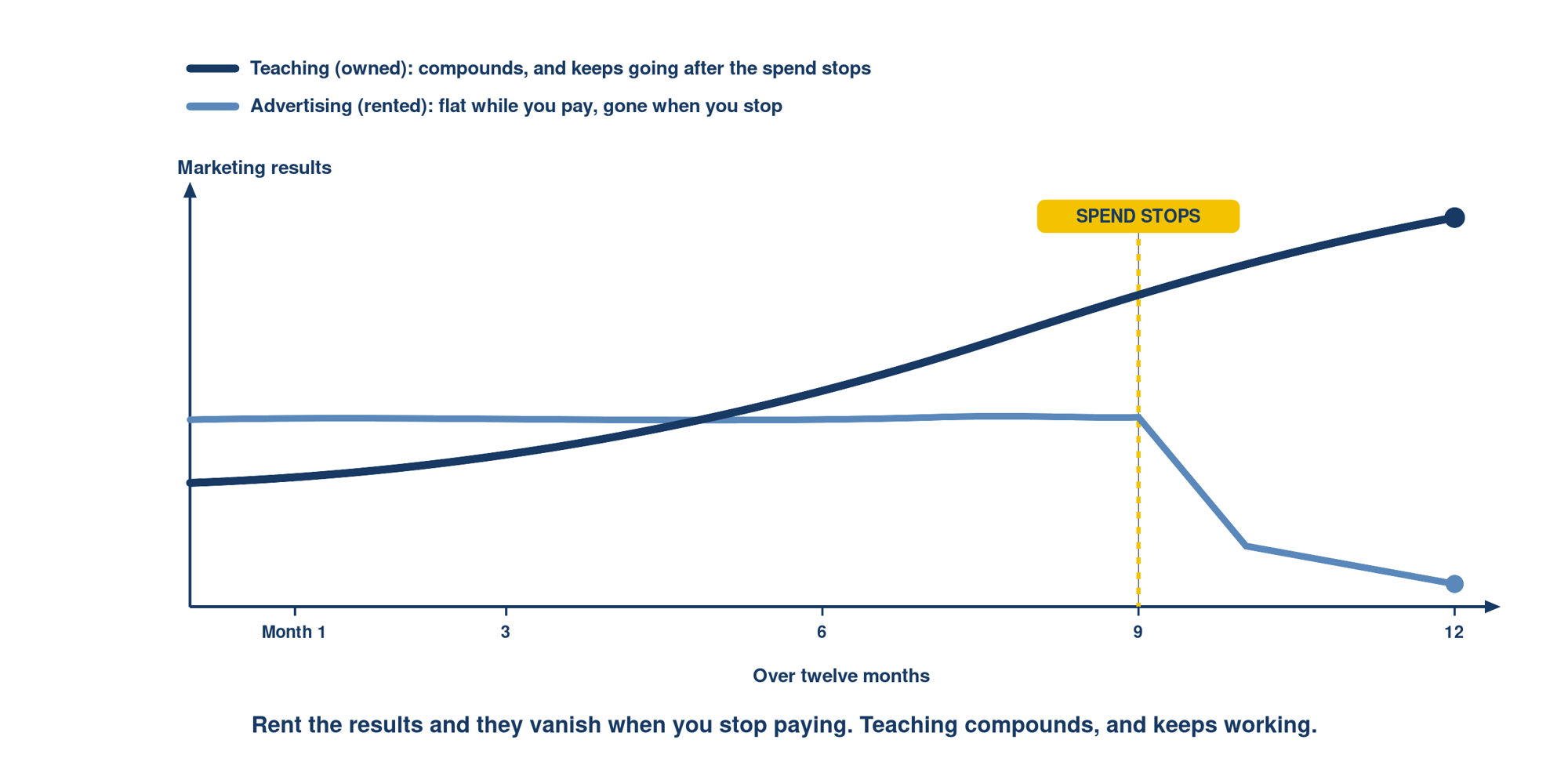
The real gap between the two advisors is compounding. The teaching advisor’s second class is easier than the first, because some people came back and some brought a friend. The third is easier still. Word travels, faces become familiar, and the advisor’s name starts to carry a little recognition before they say anything. Every event stands on the ones before it. Advertising does not stack this way. Each impression is bought new, and the campaign is roughly as expensive in month twelve as it was in month one. Teaching gets cheaper and stronger as it goes. Ads do not.

Rented Vs Owned


You Become Known for Something

Spend a year teaching one community on one set of topics and something quietly valuable happens: you become the advisor known for it. The person others mention when a friend is facing that exact decision. That standing is nearly impossible to buy and hard for a competitor to dislodge, because it was earned slowly and rests on a year of genuine help rather than a media budget. No single ad, however clever, confers it. Only consistency does.

The Body of Work Keeps Working

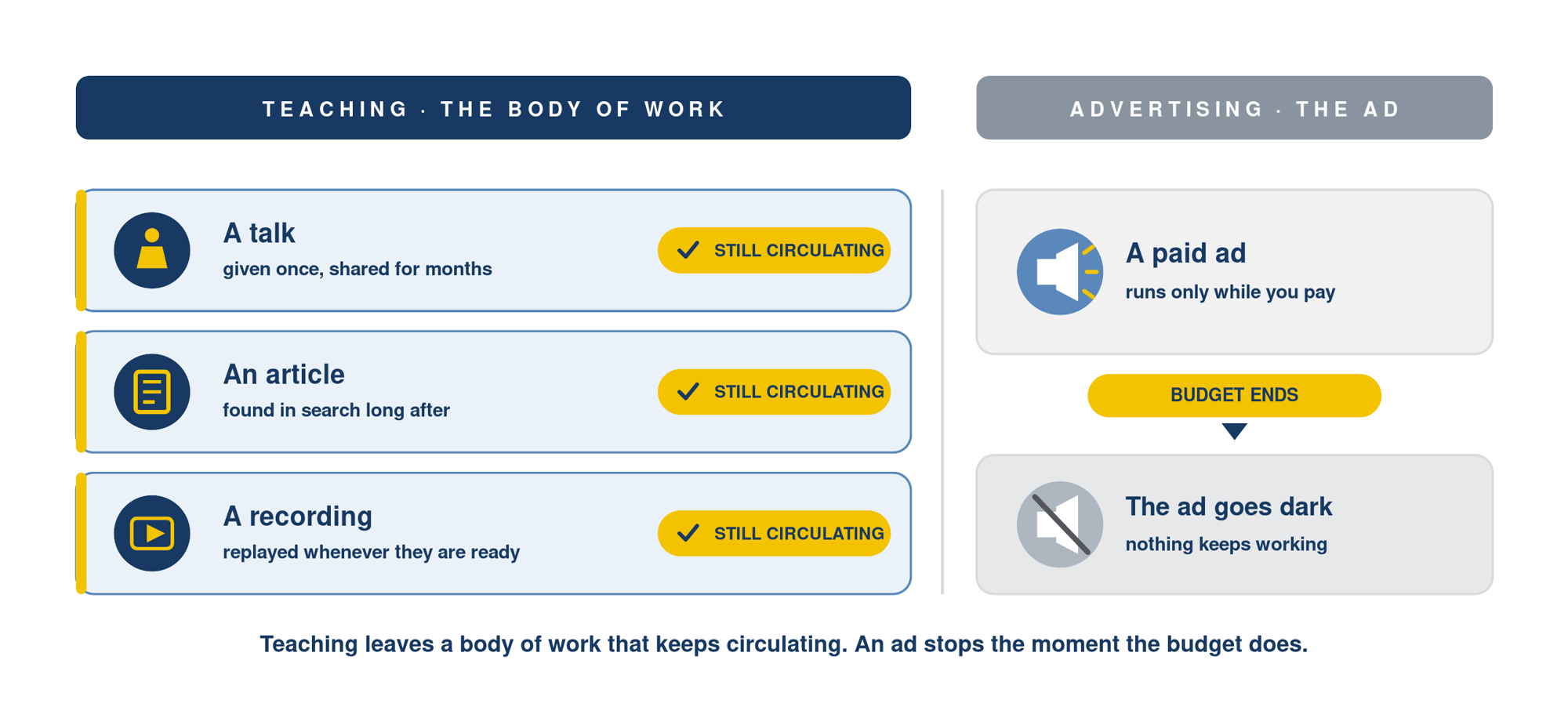
There is a second, quieter dividend. A year of teaching leaves a trail: the talks, the articles, the resources, the recordings. That material keeps circulating and keeps being useful long after it was made, introducing the advisor to people who were not in any room. Ads have no afterlife. The moment the budget stops, so do they. Teaching produces owned assets that go on working for free, while advertising produces nothing that outlives the invoice.

Body Of Work

The Slow Advantage

The reason more advisors do not choose teaching is that its payoff is slow and hard to see. An ad produces a click today. A class produces a reputation in a year. In a business that likes to measure things monthly, the slower path is easy to abandon before it pays off, which is precisely why it stays an advantage for the advisors who stick with it. The barrier to copying a teaching reputation is not secrecy. It is patience. A competitor can match your ad spend tomorrow. They cannot match a year of trust you have already built.

The One Thing a Budget Can’t Buy

Advertising and teaching are not really the same kind of thing, even though both cost money and both aim at growth. One rents attention for as long as you pay. The other builds a reputation you keep. At the end of a year, the advisor who taught has something the advisor who only advertised cannot buy at any price: a community that knows them, trusts them, and thinks of them first. That is what education builds that a campaign never will, and it is why teaching, done consistently, is not a marketing tactic but a growth engine.

See How Education-Led Marketing Works

Learn how advisors use FINRA-reviewed courses and repeatable campaigns to attract better-qualified prospects.